Refill, Please: The Quiet Economics of the Third Cup
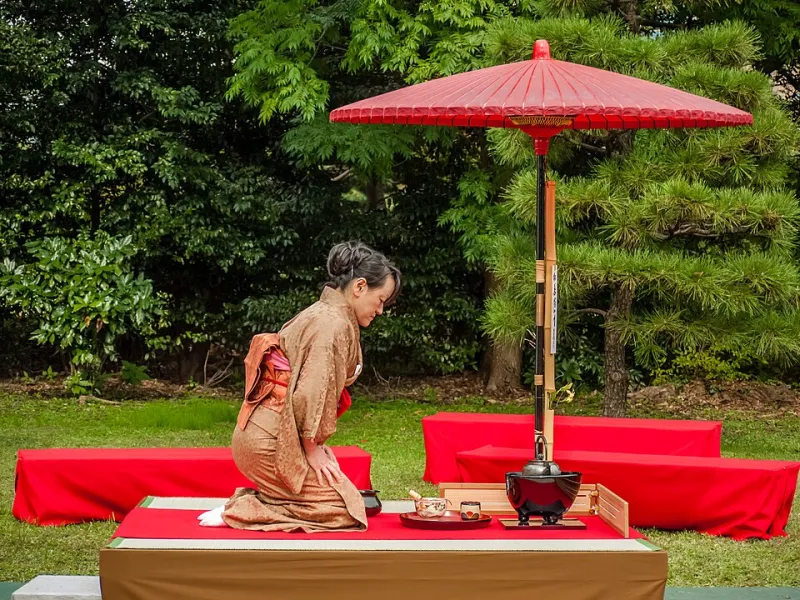
Photo: Ermell, CC BY-SA 4.0, via Wikimedia Commons
There is a moment in a Kyoto tea gathering that no guidebook mentions. The formal temae ends. The guests have admired the bowl, praised the sweets, photographed nothing because photographs would spoil it. And then, sometime later, the host returns with a plain kettle and pours a second cup. Then a third. No choreography. No seasonal scroll. Just tea.
Ask anyone who has spent real time in a tea room which cup they remember, and it is rarely the first. It is the third — the one poured while the conversation had moved on to something ordinary. That is the moment the relationship stopped being a performance and became a friendship.
American brands have the equation exactly backwards.
We Have Industrialized the First Cup
No market on earth spends more on the first cup than ours. Launch events. Unboxing videos filmed in one take. First-purchase emails with subject lines engineered like movie trailers. Welcome kits with tissue paper folded by hand. The entire discipline of 'customer delight,' as it is practiced in the US, is a discipline of beginnings.
There is nothing wrong with a beautiful beginning. But look at where the money actually goes: the touchpoints that happen once per customer get the design budget, and the touchpoints that happen fifty times get the template nobody has updated since the Series A.
Consider the lifecycle of a typical DTC brand. The unboxing is art-directed. The reorder confirmation email is a system default. The receipt is a legal necessity wearing a logo. The fifth purchase — the one that proves the customer is real — is celebrated with an automated 'Thanks for your loyalty!' that could have come from any company in any category.
We design the ceremony and outsource the friendship.
What the Third Cup Actually Costs
Here is the uncomfortable arithmetic. A first purchase in most American consumer categories is roughly break-even after acquisition costs. The margin lives in the repeat purchases — and repeat purchases are decided not by delight but by friction, or the absence of it.
The third cup in the tea room is cheap. It is the same tea, the same kettle, the same bowl. Its power comes precisely from its ordinariness. It says: you are not a guest anymore; you are ours. No brand in America can say that sentence, but every brand can design for it.
What does a third cup look like in a US business? It looks like the reorder flow that takes eleven seconds instead of two minutes. It looks like a support reply that remembers your last problem without making you re-explain it. It looks like an invoice that is a pleasure to read. It looks like the subscription renewal email written by a human who knows what you bought, not a segmentation bucket you happen to be in.
None of these will ever appear in a brand case study. That is exactly the point. Ceremony photographs well. Refills do not.
An Audit in Two Columns
The practical work is simple, and you can do it in an afternoon. List every touchpoint a customer touches across their lifetime — not just the first ninety days. Then sort each one into two columns.
Ceremony: touchpoints that occur once or twice, that carry high production value, that would look good on Instagram. Onboarding. Unboxing. Launch. Anniversary emails.
Refill: touchpoints that occur repeatedly, that carry the accumulated weight of the relationship. Reorder flows. Support conversations. Billing. Shipping notifications. The product itself, on its fortieth use.
Now assign your design hours accordingly. In most companies we have audited, the ratio is inverted: ceremony gets roughly eighty percent of the creative attention while refill gets the leftovers. The tea room would call this a category error — honoring the guest and neglecting the friend.
One more test for each refill touchpoint: would a loyal customer forgive this if it were mediocre? They would, once. The question is not whether they tolerate it but whether it quietly spends trust you have not yet deposited. Loyalty is not a points program. It is a running ledger of small moments, and the small moments are all repeat moments.
The Discipline of the Ordinary
Kyoto's workshops understand something that our growth playbooks do not: the highest expression of craft is not the exceptional piece but the everyday one made without complaint, a thousand times, to the same standard. The tea master's third cup is poured with the same attention as the first precisely because the guest is no longer a guest.
American brands tend to treat attention as something to be won. The Kyoto view is that attention is something to be kept — and that keeping it is a design problem, not a marketing one.
So audit your ceremony. Admire it. Then go find your third cup — the plain, repeated, unphotogenic interaction your best customer touches every week — and give it the care you once reserved for the launch.
That is where lifetime value is actually poured.