The Underside of the Tray: Why Invisible Quality Is Your Loudest Referral
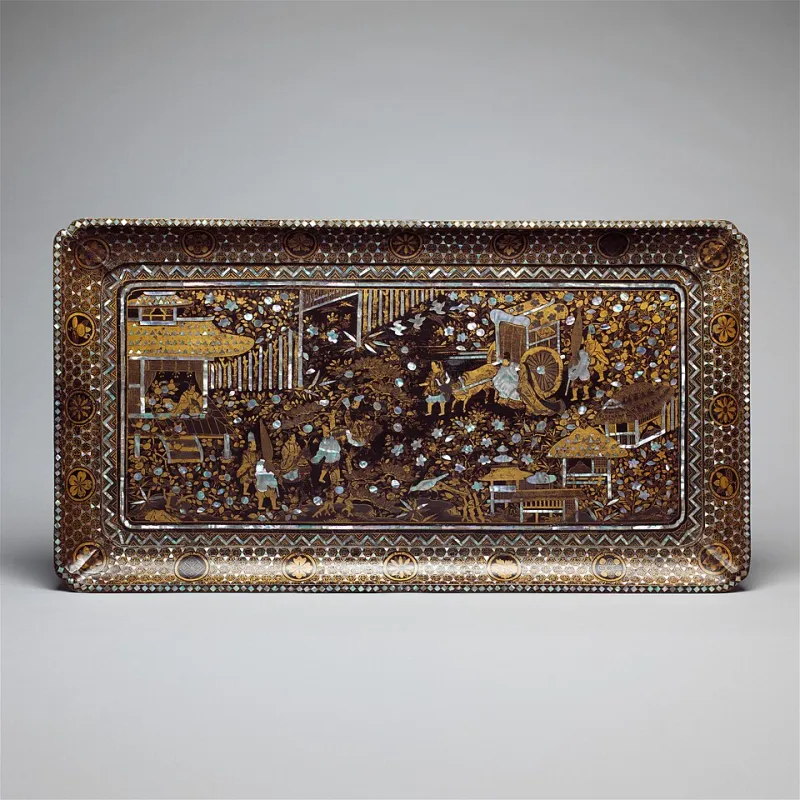
Photo: Unknown, CC0, via Wikimedia Commons
In the lacquer workshops of Kyoto, there is a standard of finishing that has no English name. Artisans will spend hours smoothing the underside of a serving tray — a surface that will rest on a table, face down, for the entirety of its life. They will cut joinery inside a drawer with the same precision they'd use on the visible face of a cabinet. The client will never see it. The client's guests will never see it. And yet the work is done, because the craftsman knows something American agencies are still learning: the parts nobody sees are where trust is actually manufactured.
Call it the 120% standard. You deliver everything in the contract, then quietly add the twenty percent that was never specified, never billed, and never demonstrated. Not as a marketing stunt — as a matter of professional identity.
What the Client Never Checks
Every agency has a visible layer and a hidden layer. The visible layer is what gets reviewed in the deck: the brand mark, the homepage hero, the launch announcement. The hidden layer is everything else — the accessibility fixes on pages the client never visits, the alt text written at midnight, the naming conventions in the design file, the handoff document so thorough the client's next hire can onboard themselves.
Here is the uncomfortable question: if you deleted every part of your deliverable the client couldn't see, would the work still hold?
In Kyoto, the answer to that question is the entire reputation. A tray that looks beautiful but creaks when lifted is not a tray; it is a lie with lacquer on it. The workshop's name travels not through the polished top surface but through the decades of use — the moment, five years in, when the underside still shows no warp, and the owner realizes someone cared about a surface they were never meant to notice.
The Twenty Percent Nobody Invoices
There is a practical objection, and it's a fair one: agencies are not workshops, margins are thin, and giving away labor is a fast route to insolvency. But the hidden twenty percent is rarely the expensive part. It is usually the discipline part.
- The extra hour organizing the asset library before handoff.
- The email that flags a licensing risk the client didn't know they were taking.
- The component built to scale, not just to ship.
- The honest note that the client's favorite concept won't survive contact with their actual audience.
None of this appears on an invoice. All of it appears in how the client talks about you later. Because here is the mechanism most agencies miss: clients rarely refer the work they saw. They refer the feeling of having been served by people who did more than required.
Why Referrals Come From the Unseen
Think about how recommendations actually travel in the American market. A founder at a dinner in Austin doesn't walk through your case study slide by slide. She says, "They caught things we didn't even know to ask about." That sentence — the most valuable sentence an agency can earn — is never about the visible layer. It is always about the hidden one.
Referrals are a lagging indicator of invisible labor. The client who discovers the meticulous file structure six months after launch, or the clean code comment that saves their developer a week, has experienced something rare: proof that you were rigorous when no one was watching. That proof converts more reliably than any award, because it cannot be performed. It either exists or it doesn't.
Building the Standard Into the Process
The 120% client relationship doesn't happen by accident or by heroic all-nighters. It happens when a studio decides, in advance, what its hidden layers will contain. A few practices worth adopting:
Name the underside. Create an internal checklist of deliverables the client will never review — and treat it as non-negotiable as the ones they will.
Finish in the order craftsmen do. Lacquer workers build the invisible layers first, because everything visible depends on them. Strategy before aesthetics. Architecture before skin.
Let the work testify quietly. Don't announce the extra effort. The Kyoto artisan doesn't flip the tray over to show the client the joinery. The discovery, when it comes — and it always comes — carries far more weight unannounced.
The Long Arithmetic of Generosity
There is a temptation, in a market obsessed with utilization rates and scope discipline, to treat invisible quality as a romantic indulgence. It is closer to a compounding asset. Every hidden layer of rigor is a deposit into an account that pays out in referrals, renewals, and the particular calm of knowing your work will hold up when someone finally looks underneath.
The lacquer tray in a Kyoto workshop may spend fifty years face-down. The craftsman finishes it anyway — not for the client, exactly, but for the standard the workshop must be able to live with. That is the quiet confidence our name is built on: trust is what remains when the visible work is done and someone, eventually, turns the piece over.