What the Empty Shelf Is Actually Selling: Kyoto's Discipline of the Unmade Product
Photo: Dale Cruse from San Francisco, CA, USA, CC BY 2.0, via Wikimedia Commons
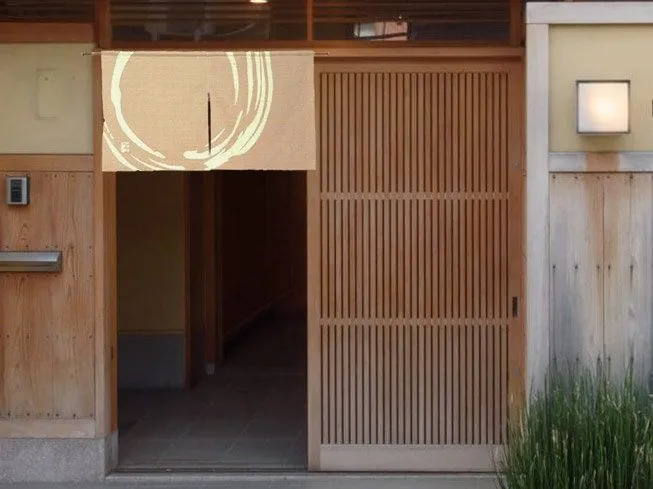
Walk down a quiet street in Kyoto's Nakagyō district and you may pass a shop with almost nothing in it. A single shelf of ceramics. A small stack of dyed cloth. A handwritten card noting the next available batch — perhaps weeks away. In any American retail context, this would read as failure: empty shelves, unmet demand, a business leaving money on the table.
In Kyoto, it reads as a resume.
Availability Is Not a Virtue Everywhere
The American market has been built on a promise of abundance. Anything, anytime, shipped overnight, restocked infinitely. This promise has been extraordinarily profitable — and it has quietly eroded something. When everything is always available, nothing signals care. Choice becomes noise, and the customer's trust migrates to whoever can shout loudest about convenience.
The artisan shops of Kyoto operate on an inverted logic. A woodworker who could produce two hundred cutting boards a year produces forty, because the fortieth is as considered as the first. A dye house refuses a lucrative wholesale order rather than alter a pigment formula that has taken three generations to stabilize. The empty shelf is not a supply-chain accident. It is a statement: we will not make more of this than the craft allows.
The Line Between Scarcity and Theater
American founders have seen scarcity weaponized before. The drop model, the limited-edition hype cycle, the countdown timer — these are scarcity as adrenaline. They work, briefly, and then they train your customers to distrust the very signal you're sending. When everything is "limited," nothing is.
The distinction lies in direction. Hype scarcity is performed for the market; it exists to manufacture urgency. Craft scarcity is enforced by the work; it exists because the maker refuses to compromise the object. Customers can feel this difference even if they cannot articulate it. One is a countdown clock. The other is a waiting list with a face and a workshop behind it.
A Framework for What You Refuse to Make
For a US brand considering this discipline, the practical question is not "how do we create scarcity?" but "what should we deliberately not offer?" Three tests help.
The integrity test. If producing twice as much would require changing how the work is made — cheaper materials, faster hands, fewer reviews — then your current volume is a ceiling, not a target. Write that ceiling down. Publish it, even.
The regret test. Look at your product line and ask which items you would remove if starting today. The things you sell only because you always have are diluting the things you'd defend. Kyoto shops are ruthless here; a tea shop may carry nine teas, not ninety, because the owner can vouch for every one.
The explanation test. When you say no to a product, an order, or a channel, can you explain the refusal in one honest sentence? "We can't make this quantity without changing the wood" is a trust signal. "We want to keep it exclusive" is a marketing claim. Both create waiting. Only one creates belief.
Saying No in a Market of Infinite Yes
There is a compounding effect to this restraint that American brands undervalue. Every visible refusal — a product discontinued, a wholesale order declined, a waitlist left honest — accumulates into a reputation for meaning what you say. In a market saturated with infinite choice, the rarest commodity is not selection. It is the sense that someone behind the counter is exercising judgment on your behalf.
This is, ultimately, a design decision rather than a sales tactic. The empty shelf is part of the brand's composition, the way negative space is part of a page. It tells the customer what the maker values by showing what the maker declined.
You do not need a Kyoto workshop to practice this. You need only the willingness to leave a shelf empty — and to let that emptiness speak.