Stop Sanding Down the Rough Edges: A Practical Guide to the Kintsugi Audit
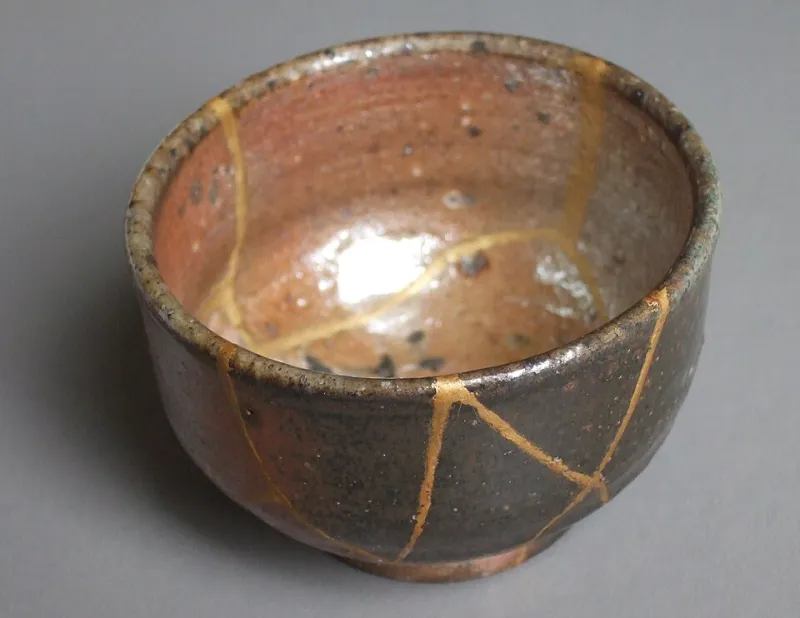
Photo: Haragayato, CC BY-SA 4.0, via Wikimedia Commons
There is a moment in nearly every rebrand engagement when a client slides a deck across the table and asks, essentially, how do we make this look like we've always been successful? The request is understandable. American business culture rewards the seamless — the founder who never stumbled, the product that never pivoted, the logo that could belong to a company twice its size.
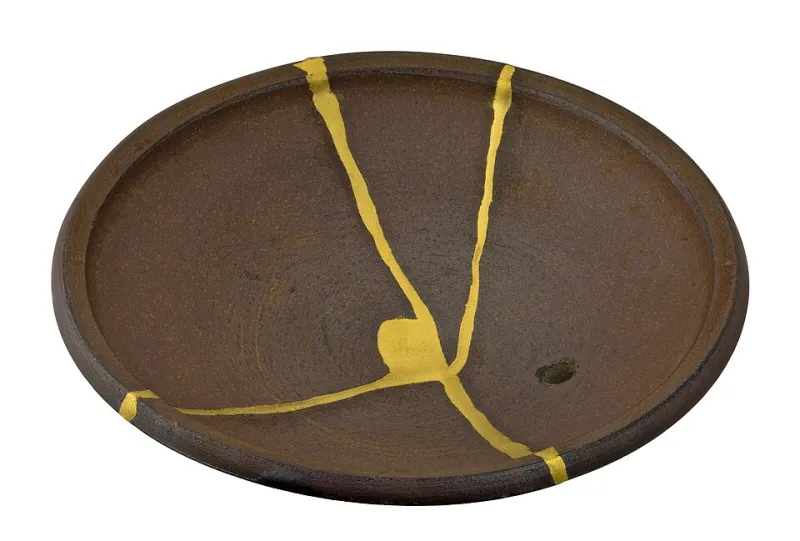
In our studio's work with ceramics, we learned a different lesson long before we applied it to brands. When a beloved bowl breaks, the instinctive response is to hide the damage: glue it, disguise the seam, hope no one looks too closely. Kintsugi refuses this. The fracture is joined with lacquer dusted in gold, and the repair becomes the most examined part of the object. Not despite the break — because of it.
Most branding agencies operate like the glue-and-disguise school. We would like to propose the opposite: an audit, done before any redesign, that asks which of your flaws are actually load-bearing.
What the Kintsugi Audit Actually Is
The Kintsugi Audit is a structured inventory of everything your brand is embarrassed by, followed by a disciplined evaluation of each item. It takes roughly two weeks and requires uncomfortable honesty. Here is the process we use.
Step one: The confession list. Gather your team and write down every perceived weakness — the ones that surface in sales calls, the ones your competitors jab at, the ones you privately rehearse answers to. A midwestern manufacturer might list: "founded by my grandfather in a garage," "our packaging looks dated," "we lost the enterprise contract to a startup."
Step two: The origin test. For each item, ask a single question: Did this happen because of who we are, or in spite of it? A scrappy origin story happened because of who you are. An outdated packaging system happened in spite of it — that's neglect, not character. Only the first category is a candidate for gold.
Step three: The stakeholder probe. Show the surviving items to five customers and ask what they assume about your company because of them. Flaws worth keeping tend to generate inferences you could never afford to buy: authenticity, grit, specificity. Flaws worth fixing generate doubt.
Step four: The design decision. For each item, choose one of three paths: repair (fix it properly), seal (remove it quietly), or gild (make it central to your identity). The discipline lies in not defaulting to repair for everything. Polish is expensive, and it erases information.
What American Brands Get Wrong About Polish
The US market is saturated with companies that look identical — same sans-serif wordmarks, same muted palettes, same founder-story copy about "obsession with craft." This convergence is the direct product of flaw-erasure. When every company sands down its rough edges, the edges that made it findable disappear.
Consider the brands Americans actually feel loyalty toward. A diner that has never renovated its booths. A toolmaker whose handles haven't changed since 1964. A regional bank whose tellers know your name. These are not accidents of neglect; they are brands that declined to gild over their seams, and were rewarded with trust that a rebrand could never purchase.
There is also a practical argument. Consumers under forty have been marketed to with extraordinary sophistication their entire lives, and they have developed a kind of fluency in detecting the seamlessness that signals effort rather than substance. A visible repair — an honest "we used to do this badly," a product design that reveals its constraints — reads as evidence. Perfection reads as assertion.
The Limits of the Metaphor
We should be clear about what the Kintsugi Audit is not. It is not an invitation to romanticize dysfunction. Broken customer service is not a quirky seam; it is a break that needs proper repair before anyone reaches for gold. The framework only works when the flaw is structural to your identity rather than a failure of execution. Distinguishing between the two requires the kind of outside perspective an internal team rarely has — which is, admittedly, a convenient thing for a design studio to point out.
It is also worth saying that gilding is a commitment. Once you celebrate a flaw publicly, you own it permanently. The garage origin story cannot later be retrofitted into a corporate mythology. This is precisely why the audit works: it forces a decision that polish allows you to defer forever.
Begin With the Bowl
If you take one action from this piece, make it this: before your next planning cycle, convene the people who know your company's cracks best and ask them to name them out loud. No fixing. No action items. Just the inventory.
In the kintsugi workshop, nothing begins until the broken pieces are laid out on the table and examined honestly — their shape, their history, their fit. Brands deserve the same courtesy. The flaw you've been hiding may turn out to be the only part of your identity a competitor cannot copy.