Three Is a Number, Five Is an Escape: The Case for Fewer Design Options

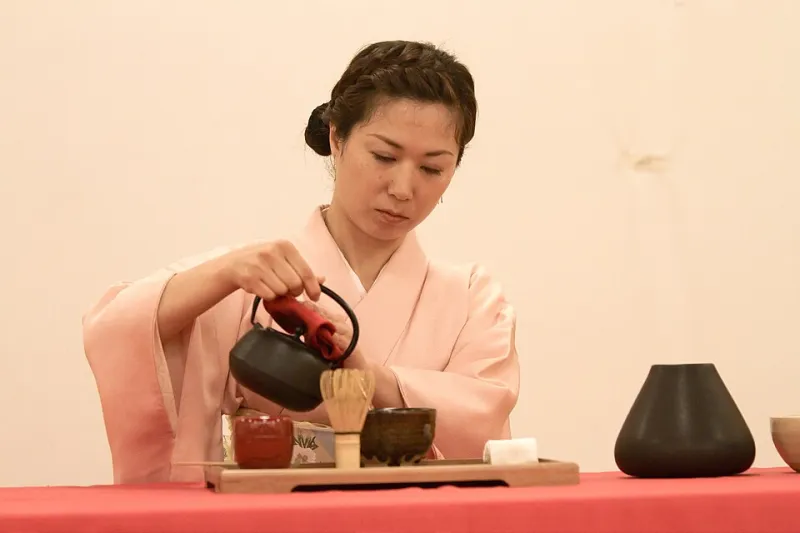
Photo: japanese craftsman workshop presenting ceramic samples on wooden table, via images.stockcake.com
Somewhere in a Kyoto workshop, a lacquer master is finishing a commission. When the client arrives to review progress, they will be shown three samples. Not four. Not six. Three — one faithful to the brief, one that pushes the material somewhere new, one that the craftsman chose on instinct alone.
Compare this to the standard American agency presentation: a deck of five to nine creative directions, each with its own rationale, each hedging the studio's bets. We call it giving the client options. More often, it is a failure of nerve dressed up as generosity.
Volume Is Not Value
The logic of the many-option presentation is defensive. If the client dislikes direction one, there are four more behind it. If they hate everything, the agency can point to the breadth of exploration. But clients do not experience this as thoroughness — they experience it as indecision. Every additional option quietly asks, you decide which of us knows what we're doing.
The Kyoto craftsman cannot afford this ambiguity. Materials are expensive, timelines are long, and reputation travels through generations, not quarterly reviews. Three samples force the maker to have an opinion — and to stand behind it. The client, in turn, is not asked to be a creative director. They are asked to react, choose, and refine.
That is the actual division of labor in a healthy client relationship: the studio decides, the client approves. When an agency hands over nine directions, it has outsourced its most valuable function.
The Architecture of Three
Why three specifically? It is the smallest number that creates genuine contrast without collapsing into a menu. Two options feel like a binary trap. Four or more, and the distinctions blur — behavioral research in the US has long documented the paralysis of choice overload, from jam tastings to retirement plans. Three holds.
But the number only works if the options are structured, and this is where the Kyoto model offers a practical framework:
1. The Faithful. The direction that answers the brief exactly as written. This sample proves you listened. It should be genuinely strong — not a strawman you expect the client to reject.
2. The Bold. The direction that takes the brief seriously but follows its implications somewhere the client didn't anticipate. This is where your expertise shows. It should make the client slightly nervous, and then slightly excited.
3. The Instinct. The direction with no obvious justification — the one you would make if it were yours. Present it honestly: we cannot fully defend this one, but we believe in it. Clients are often more moved by a studio's conviction than by its logic.
Presented this way, the presentation becomes a conversation about values rather than a scavenger hunt through alternatives. The client learns how you think, not just what you made.
What Curation Signals
There is a deeper exchange happening beneath the samples. When a studio limits its options, it is making a promise: we did the filtering so you don't have to. In a market flooded with infinite iterations and AI-generated variations, that filtering is the scarcest commodity. Anyone can generate more. Only a confident studio can generate less.
American founders, in particular, tend to equate more options with more control. But control over a menu of choices is not the same as confidence in a decision. The client who leaves a three-sample meeting with a clear pick and a clear rationale is better served than the one who leaves a nine-sample meeting with a shortlist and a follow-up call scheduled.
A Practical Discipline
For studios ready to adopt the three-sample rule, a few ground rules:
- Kill your fourth favorite. If it hurts to cut it, the framework is working. The pain is the point.
- Never present a direction you don't want chosen. Every sample must be a real recommendation.
- Name the instinct out loud. Clients forgive an undefended option; they don't forgive a hidden one.
- Commit to a decision timeline. Three options, one meeting, one decision. The constraint is the courtesy.
The craftsman in Kyoto is not showing three samples because he lacks range. He is showing three because he respects the client's time, his own judgment, and the gravity of the decision at hand. American agencies would do well to treat that restraint as the competitive advantage it is — and to discover that the shortest menu is often the most persuasive.