The Guest Who Speaks Last: Rethinking the Discovery Call Through Kyoto's Order of Service
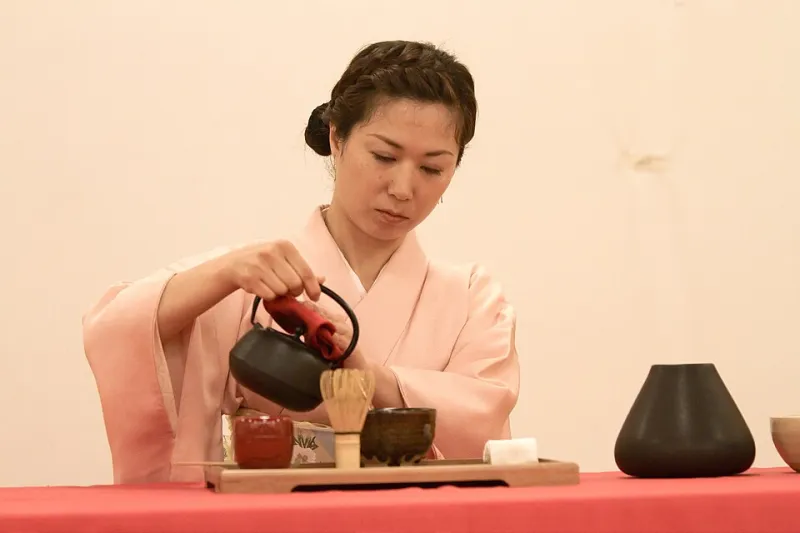
Photo: Georges Seguin (Okki), CC BY-SA 3.0, via Wikimedia Commons
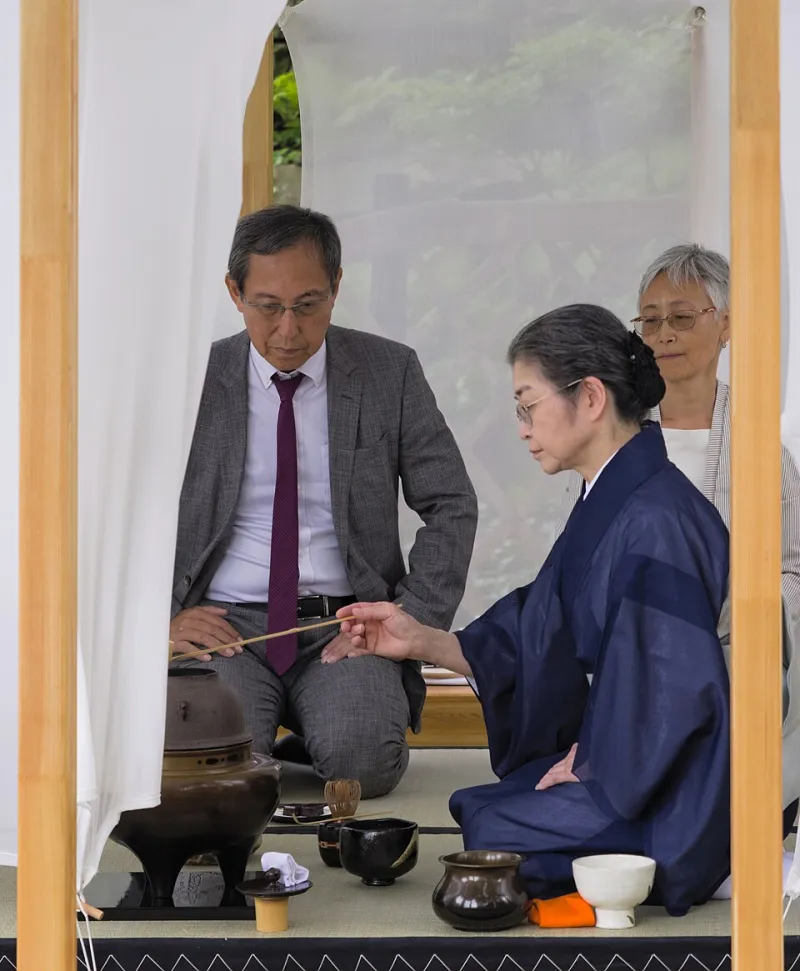
There is a moment in every formal tea gathering in Kyoto that would strike most American agency founders as deeply inefficient. The guest of honor — the shōkyaku — is the last to be served, the last to examine the utensils, and often the last to offer an opinion. The entire sequence of the ceremony bends around this person, yet almost nothing demands their voice early. Their presence is treated as information in itself.
Now contrast this with the typical discovery call between a US design studio and a prospective client. Within the first ten minutes, someone is sharing a screen. A capabilities deck appears. Case studies scroll by. The agency, anxious to prove competence, fills every silence with evidence of its own brilliance.
We would argue that this instinct — generous as it seems — quietly flips the power dynamic of the meeting. The client came to be understood. Instead, they were given a performance.
The Sequence Is the Strategy
What the tea ceremony understands, and what many agencies have forgotten, is that order communicates respect more powerfully than eloquence. Every gesture in the tea room is sequenced so that the most important person in the room is never rushed, never pressured, and never asked to perform before they are ready.
Translate that into a discovery call and the implications are concrete:
Ask before you present. The first thirty minutes belong entirely to the client's world — their market, their anxieties, the internal politics they didn't put in the brief. Not qualifying questions fired from a template, but genuine inquiry with generous pauses.
Let the silence do its work. American business culture treats a pause on a Zoom call as a technical failure. In Kyoto, the pause between actions (ma) is where meaning accumulates. When a client stops mid-sentence, resist the urge to fill the gap. What surfaces in that gap is often the real project brief.
Speak last, and speak least. When it is finally your turn, offer a reflection rather than a pitch. "Here is what we think we heard" lands very differently than "Here is what we would do."
What You Learn by Waiting
Agencies fear that restraint reads as passivity. In practice, the opposite occurs. A client who has been genuinely listened to — who has not been interrupted by a slide deck — walks away with the rare impression that the studio is confident enough not to sell.
And the information you gather is better. Clients rehearse their answers to obvious questions. What they have not rehearsed is what they say when the meeting is arranged around them rather than around you. The unspoken tension between the CMO and the founder. The rebrand that failed two years ago and nobody wants to name. These are the materials real brand strategy is made from, and they only surface when the client has been given the guest of honor's seat.
A Simple Framework for the Next First Call
Borrow the structure of the ceremony directly:
- Preparation before arrival. Research the client the way a tea master prepares the room — so thoroughly that nothing during the meeting needs to be improvised.
- The client speaks first, at length. Set the expectation in the invitation itself: "We'd like to spend most of our first conversation listening."
- One reflection, not ten recommendations. Close with a single, considered observation about what you heard. Depth signals capability; breadth signals desperation.
- Follow-up as hospitality, not pursuit. A short, thoughtful note within a day — not a proposal rushed out the door to beat a competitor.
None of this requires adopting the aesthetics of the tea room. It requires only adopting its logic: that the person you most need to understand is the person you should least interrupt.
The agencies that win premium clients in the American market are rarely the ones with the loudest first meeting. They are the ones who made the client feel, as the shōkyaku feels, that the entire room had been arranged for their arrival — and that the most important thing they could bring was exactly what they brought: themselves, unhurried, and heard.