The Ledger That Spans a Lifetime: Rethinking Retention Through Kyoto's Tea Rooms
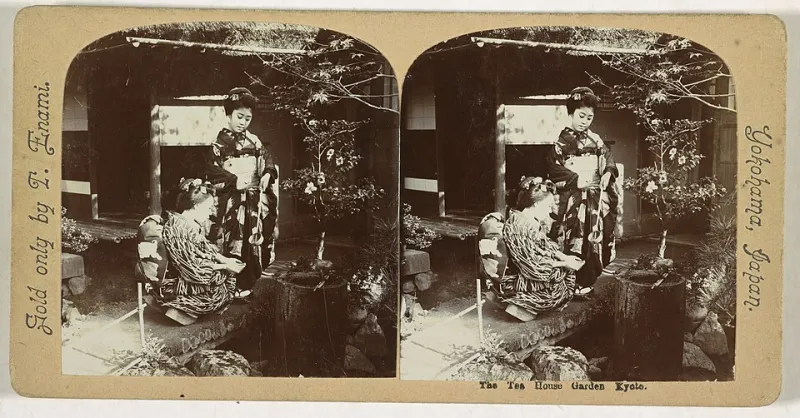
Photo: Rijksmuseum, CC0, via Wikimedia Commons
There is a tea house in the Higashiyama district that has served the same family of patrons since the 1930s. Not the same person — the same family. Grandmothers brought their granddaughters the way American families pass down a lake house or a Thanksgiving recipe. Nobody at the tea house calls this 'customer lifetime value.' They simply call it the work.
Contrast that with the American service economy, where the vocabulary itself betrays the mindset: acquisition funnels, churn rates, win-back campaigns. We have built an entire discipline around the assumption that clients leave. It is worth asking whether that assumption is a fact of the market or a habit of the industry.
Churn Is a Choice, Not a Law of Nature
The churn rate is a remarkably recent invention. It emerged when software became a subscription and relationships became line items. Kyoto's oldest businesses — the tea houses, the incense makers, the dye workshops — never needed the metric because they never structured themselves around departure. A client relationship was not a contract with a renewal date; it was a lineage. The goal was not to close the next deal but to be the studio your client's successor calls first.
For American agency owners, this sounds charming and impractical. It is neither. It is a different operating model with measurable mechanics.
Four Practices That Compound Over Decades
1. Serve the successor, not just the signer. When a tea house hosts a family, it honors the matriarch and remembers the granddaughter's favorite sweet. In agency terms: build real relationships below the economic buyer. The junior marketing manager you invest in today is the CMO who awards you the enterprise contract in 2031. Most firms allocate senior attention strictly by budget size. Kyoto allocates it by lineage.
2. Keep records the way a tea house keeps preferences. The best tea houses in Kyoto can recall how a guest takes their tea, the season of their last visit, the occasion being marked. Your CRM should hold this depth — not just renewal dates and invoice history, but the client's risk appetite, the rebrand that failed and why, the board member who disliked the last creative direction. Institutional memory is the cheapest retention tool ever devised, and most firms skip it.
3. Price for the relationship, not the transaction. A tea house does not raise the price of a seasonal sweet when a loyal family visits during peak cherry blossom season. Consistency signals stability, and stability is what clients are actually buying. This does not mean undercharging; it means predictability. A pricing model clients can anticipate for a decade is a retention strategy disguised as an invoice.
4. Let the client see the craft. Tea houses perform the preparation in front of the guest. The work is not hidden in a back room; it is a small ceremony. Agencies that show their process — the rejected comps, the reasoning, the revisions — turn clients from spectators into participants. Participation breeds attachment, and attachment is what a churn rate cannot calculate.
The Economics of Quiet Loyalty
The numbers behind this are not sentimental. A retained client requires no acquisition spend, refers at a higher rate, and tolerates premium pricing because trust has been established. A firm that loses 10 percent of clients annually must replace roughly half its revenue every seven years just to stand still. A firm built on lineage spends that energy deepening the work instead.
None of this requires abandoning growth. It requires reordering priorities: the tea house does not refuse new guests, but it does not chase them at the expense of the family in the corner room every autumn.
A Different Definition of Success
American service businesses tend to measure the year. Kyoto's oldest establishments measure the century. The practical difference is that a century-long horizon changes today's decisions: which clients you accept, how you staff accounts, whether you optimize for the quarter or for the relationship's next chapter.
Churn is not inevitable. It is the residue of designing for the transaction. Design instead for the return visit — the one that happens twenty years from now, when the founder has retired and the client's daughter emails to ask if you are still taking on work. That email is the entire business model. Everything else is preparation for it.